




The 5-Minute After-School Snack Platter
The most persuasive food trick I know involves zero cooking, zero new ingredients, and one cutting board. I call it the after-school platter, and it works on a principle every tapas restaurant understands: small piles of food on a shared board get eaten in a way the same food on individual plates never does.
There's no recipe here. There's a formula — and one rule that makes it work.
Why You'll Love This "Recipe"
Zero cooking, five minutes of assembly
Kids eat vegetables voluntarily — no negotiation
Uses whatever is already in the fridge
Naturally balanced: protein, produce, and crunch on one board
Scales up for visiting kids and scales down for hard days
The gentlest way to introduce new foods
The Formula
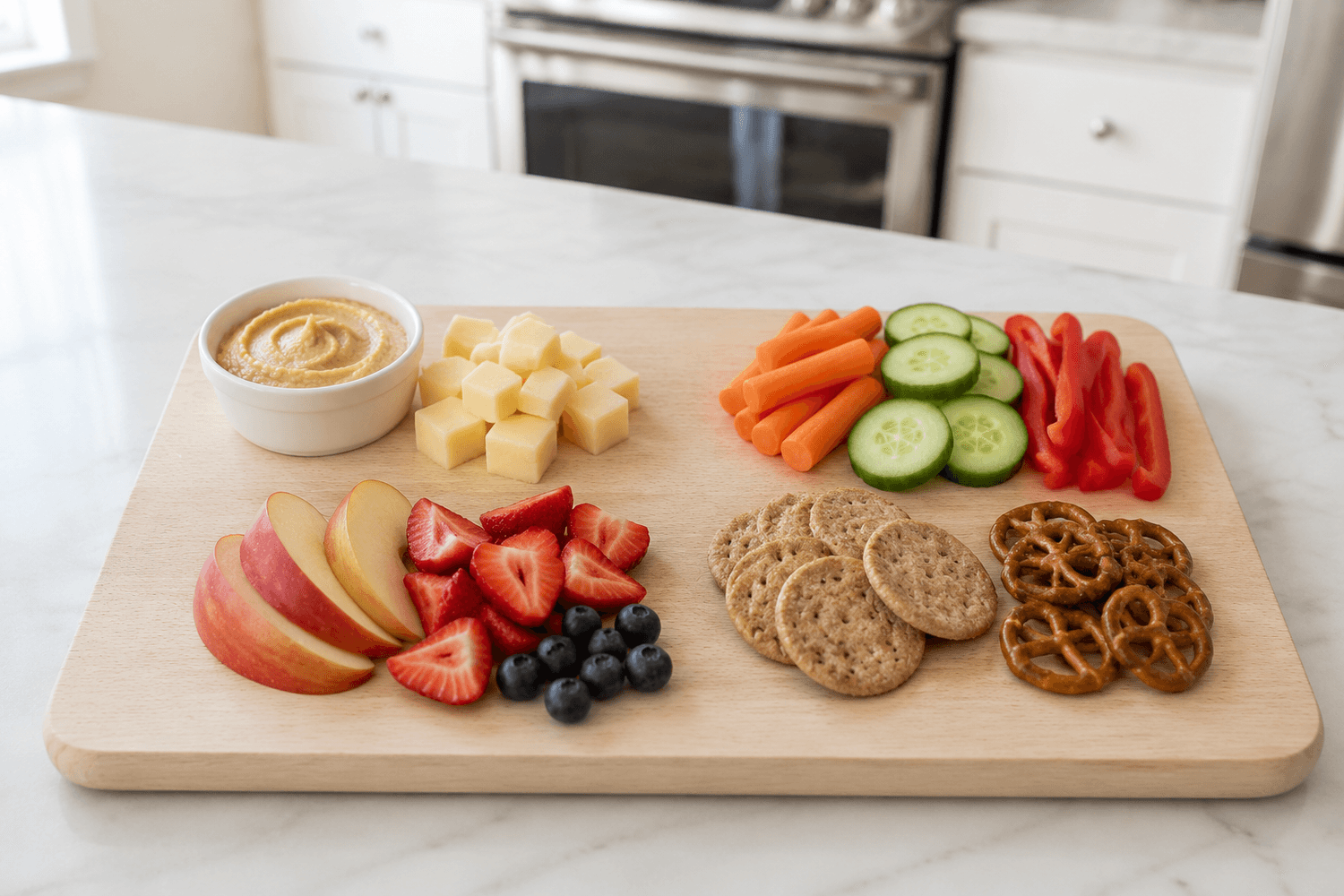
One board or big plate. Four little groups. Small pieces. No comments.
A protein: cheese cubes or sticks, rolled ham or turkey, boiled egg halves, hummus in a little bowl
A vegetable, cut small and honest: cucumber coins, pepper strips, carrot sticks, cherry tomatoes, cellery — whatever is actually in the fridge
A fruit: apple slices, orange segments, berries, grapes cut appropriately for age
A crunch: whole-grain crackers, a small handful of nuts or pretzels
Substitutions & Allergy Notes
Everything substitutes for everything — that's the point. No cheese? More hummus. No cucumbers? Frozen peas, straight from the freezer (kids are strange and wonderful).
For nut allergies, keep the crunch group to crackers and pretzels, and check cracker labels — the first ingredient should say whole grain.
Cut grapes and cherry tomatoes in halves or quarters for young children.
Instructions
Take one board or large plate.
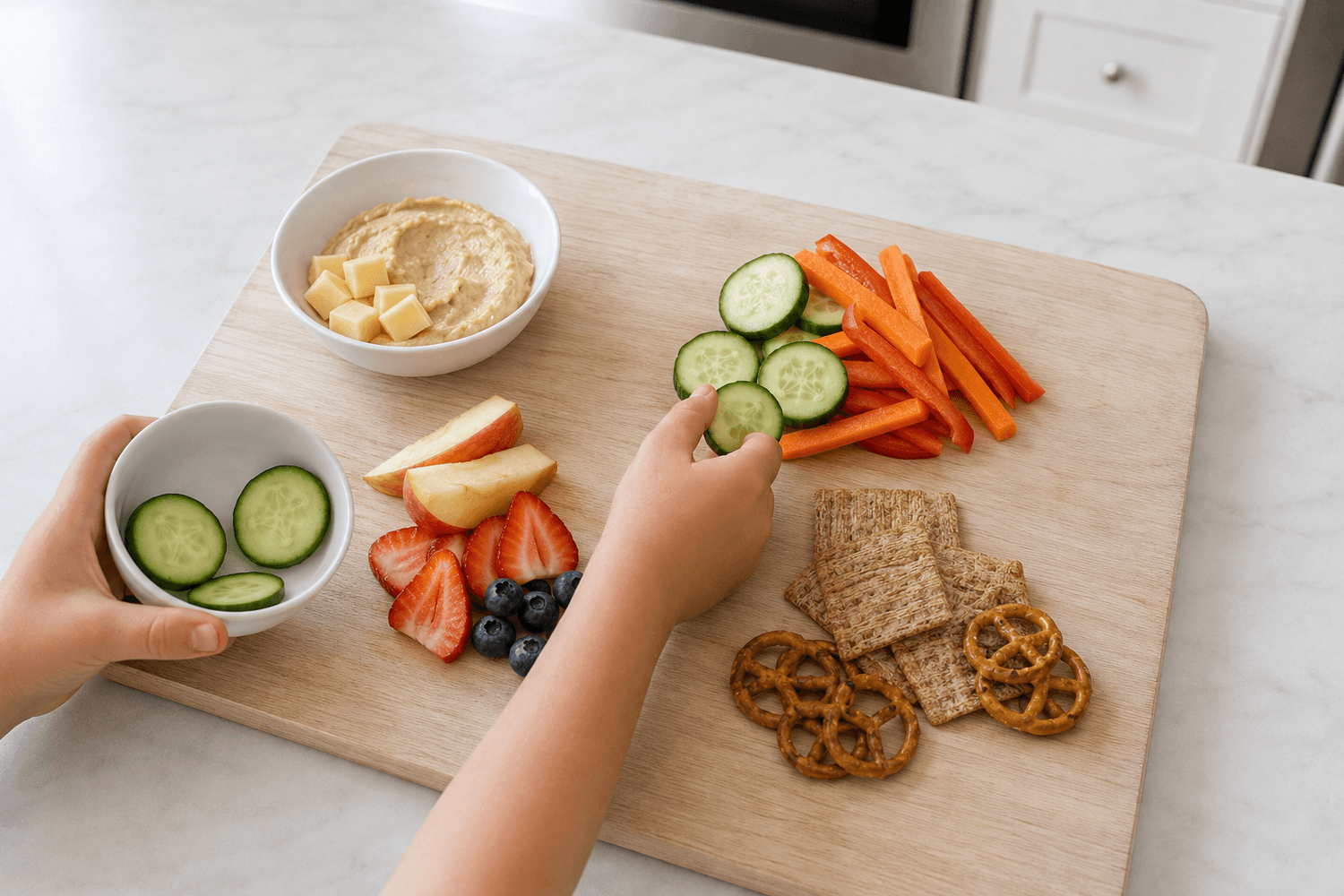
Arrange the four groups in small, separate piles. Small is important — a tired kid is overwhelmed by abundance and soothed by simplicity.
Set it on the table where the kids already are.
Say nothing. No "eat your vegetables," no announcement, no watching. Walk away and be busy.
Why the Silence Works
Grazing kids eat like their best selves. Nobody is being served a meal they can inspect and reject; food is just available, in small unthreatening pieces, and hands drift to it mid-play. The cucumber that would be protested on a dinner plate disappears from a board. Not because of any trick — because you removed the audience and the argument.
Tips From My Kitchen
Rotate one "new" thing onto the board weekly, next to the familiar things. Exposure without pressure is how new foods actually get accepted — on average after many quiet meetings, not one dramatic dinner.
On the hard days, make the board smaller, not bigger.
Anchor it with a protein your kids already love. The familiar pile gives them a safe entry point to the board.
How to Serve It
The moment they're home from school — it beats the snack-cupboard raid to the punch
As a "dinner starter" on evenings when dinner is running late (it takes the edge off the pre-dinner hour)
Weekend lunch when nobody can agree on anything
How to Store It
Leftovers go back in their containers — the board itself takes two minutes to clear. If your platters keep coming back empty, congratulations: that's the whole plan working.
The Bigger Picture
The no-pressure exposure idea — why it works and how long it really takes — is one of my favorite pieces of the picky-eating puzzle, and the protein-forward logic behind the board is the same one that runs through everything I write. The full system lives in my guides.
Pair the board with apple nachos on rotation (link goes live once published) · more ideas in Healthy Recipes.
Healthy Kids, Happy Minds shares general information about family nutrition, not medical advice. If you have concerns about your child's growth, eating, or health, please speak with your pediatrician.
Want an easier way to understand packaged foods without
analyzing every ingredient?
Understand the why behind the behavior
Explore science-informed guides that explain how nutrition interacts with
children's developing brains and bodies, and why it can influence focus, mood,
sleep and behavior.
READ NEXT
A note from Ela
Real Food for Healthy Kids and Happy Minds
This is my little corner of the internet for parents who want to feed their kids well, without the stress, and without the marketing words.
Here you'll find real-food recipes my own two kids actually eat (yes, including sweet treats, the healthy way), simple articles about how food shapes behavior, focus, and sleep, and easy label tips for your next grocery trip.
Pour yourself a coffee and look around. And if a recipe wins over your picky eater, come tell me on Instagram, it makes my whole day.
Read the label. Feed the brain. Keep it real.
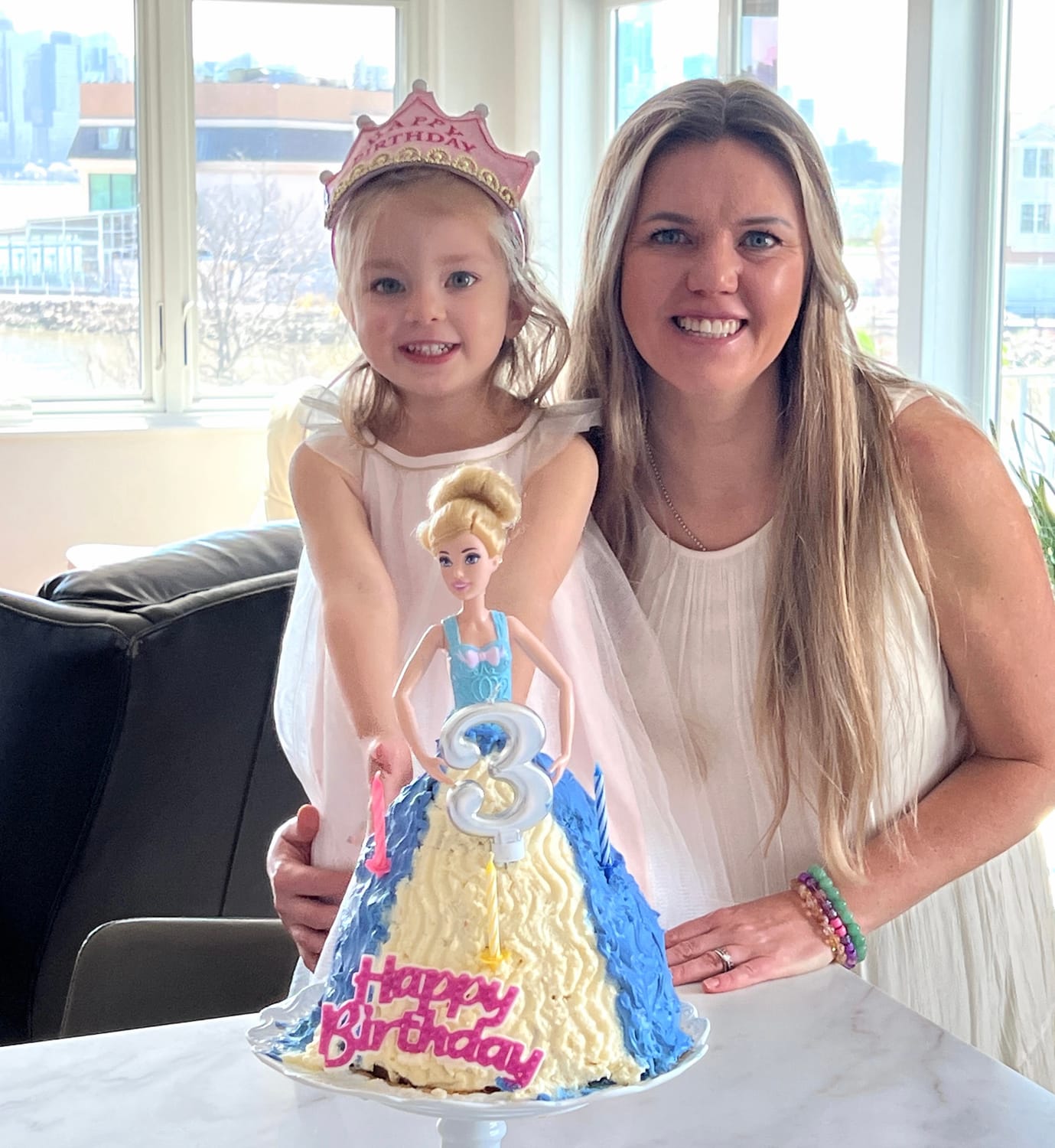
All homemade, all real food. Yes, even the princess cake. No refined sugar, no stress, and a kid who never feels like she's missing out.
Practical kids' nutrition tips, label-reading help and realistic family meals
© 2026 Healthy Kids, Happy Minds · by Ela Larsen · a brand of Serenite Group LLC. All rights reserved.